How Does the Brain Form Memories? A Neuroscience Guide
Discover how the brain forms, stores, and retrieves memories. Learn about the hippocampus, synaptic plasticity, LTP, memory consolidation, and why we forget.
Introduction
Every experience you've ever had — your first day of school, the smell of your grandmother's kitchen, the password you forgot yesterday — is encoded in the patterns of neural activity in your brain. Memory is arguably the most fundamental cognitive function, shaping who we are, how we learn, and how we navigate the world.
But how does the brain actually do it? How does a physical organ made of fat and protein store something as abstract as a memory? Neuroscience has made remarkable progress in answering this question, and the answers are both elegant and surprising.
Types of Memory
Before understanding how memories form, we need to distinguish between types:
By Duration
- Sensory memory (milliseconds-seconds): Brief impression of sensory input (iconic memory for vision, echoic for sound)
- Short-term/working memory (seconds-minutes): Holding information temporarily (a phone number you just heard)
- Long-term memory (hours-lifetime): Persistent storage of information
By Content
- Declarative (explicit) memory: Facts and events you can consciously recall
- Episodic: Personal experiences ("my wedding day")
- Semantic: General knowledge ("Paris is the capital of France")
- Non-declarative (implicit) memory: Skills and associations you don't consciously access
- Procedural: Motor skills (riding a bicycle)
- Emotional/conditioned: Fear responses, Pavlovian conditioning
- Priming: Exposure-influenced processing
These different types involve different brain regions and mechanisms.
The Hippocampus: Memory's Gateway
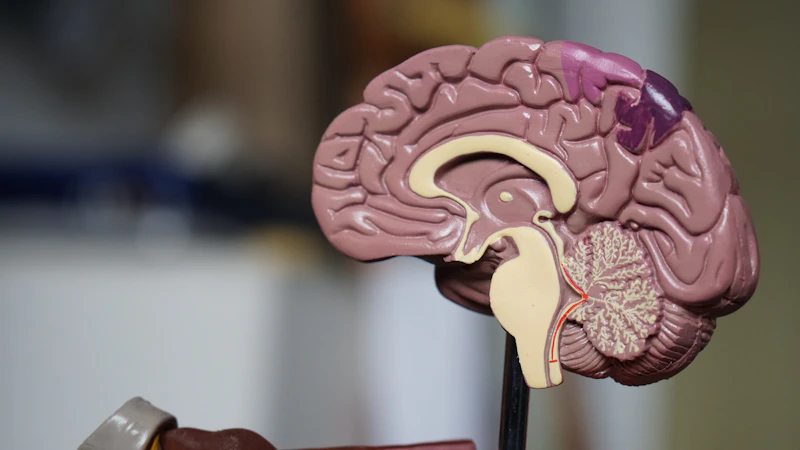
The hippocampus — a seahorse-shaped structure deep in the temporal lobe — is the brain's memory hub. It's essential for forming new declarative memories.
The Case of H.M.
The importance of the hippocampus was dramatically revealed by Patient H.M. (Henry Molaison), who had both hippocampi surgically removed in 1953 to treat severe epilepsy. The result:
- He could no longer form new long-term memories (anterograde amnesia)
- Older memories were largely preserved (though some recent ones were lost)
- His working memory, procedural memory, and intelligence were intact
- He could learn new motor skills (like mirror drawing) without remembering the practice sessions
This proved that the hippocampus is essential for forming new declarative memories but not for storing old ones.
How the Hippocampus Encodes Memories
The hippocampus acts as a temporary binding station:
- Sensory information arrives from various cortical areas (visual cortex, auditory cortex, etc.)
- The hippocampus binds these separate elements into a unified memory trace (a "memory index")
- Over time, through consolidation, the memory becomes independent of the hippocampus and is stored in the cortex
Place Cells and Grid Cells
The hippocampus contains specialized neurons:
- Place cells: Fire when you're in a specific location (discovered by John O'Keefe, Nobel Prize 2014)
- These cells also activate during memory replay, linking memory to spatial context
- Grid cells in the entorhinal cortex provide a coordinate system for navigation and memory
Synaptic Plasticity: The Cellular Basis of Memory
At the cellular level, memories are encoded by changes in the strength of connections (synapses) between neurons.
Hebb's Rule
In 1949, Donald Hebb proposed: "Neurons that fire together, wire together." When two neurons are repeatedly activated at the same time, the connection between them strengthens. This is the foundation of associative memory.
Long-Term Potentiation (LTP)
LTP is the best-understood cellular mechanism of memory:
- A presynaptic neuron repeatedly stimulates a postsynaptic neuron
- The postsynaptic neuron releases magnesium block from NMDA receptors
- Calcium floods into the postsynaptic neuron
- This triggers intracellular signaling cascades (CaMKII, PKC, CREB)
- New AMPA receptors are inserted into the postsynaptic membrane
- The synapse becomes permanently stronger
Early LTP (lasting minutes to hours): Involves modification of existing proteins Late LTP (lasting hours to lifetime): Requires new protein synthesis and structural changes — actual physical remodeling of synapses
Long-Term Depression (LTD)
The opposite of LTP — synaptic connections can also be weakened:
- Important for forgetting irrelevant information
- Necessary for learning flexibility (updating memories with new information)
- Low-frequency stimulation patterns induce LTD
Structural Changes
Memories are physically embodied in brain structure:
- New dendritic spines (tiny protrusions on neurons) grow at strengthened synapses
- Existing spines enlarge or shrink depending on use
- Synaptic boutons (the presynaptic terminals) can split to form new connections
- These structural changes can last a lifetime
Memory Consolidation
Synaptic Consolidation (Hours)
Immediately after learning, the memory trace is fragile:
- New proteins must be synthesized to stabilize LTP
- CREB (cAMP Response Element-Binding protein) is a critical transcription factor
- Disrupting protein synthesis within 1-2 hours after learning blocks memory formation
- This is why cramming is less effective than spaced learning
Systems Consolidation (Weeks to Years)
Over time, memories gradually transfer from hippocampus to cortex:
- During sleep (especially slow-wave sleep), the hippocampus replays the day's experiences
- This replay activates cortical neurons, gradually strengthening cortical memory traces
- Eventually, the memory can be retrieved directly from the cortex without hippocampal involvement
- This process takes weeks to years for most memories
The Role of Sleep
Sleep is essential for memory consolidation:
- Slow-wave sleep (SWS): Hippocampal replay of declarative memories; "sharp wave ripples" transfer information to cortex
- REM sleep: Emotional memory processing; integration of new memories with existing knowledge
- Sleep spindles: Bursts of neural activity during NREM sleep that predict memory performance
- Sleep deprivation severely impairs memory formation — even one night of poor sleep reduces next-day memory encoding by 40%
Memory Retrieval
Recall vs. Recognition
- Recall: Generating a memory from an internal cue (essay exam)
- Recognition: Identifying a memory from an external cue (multiple choice)
- Recognition is easier because it provides more retrieval cues
Pattern Completion
The hippocampus performs pattern completion — given a partial cue, it can reconstruct the full memory:
- Smelling a certain perfume → recalling an entire evening with a friend
- Hearing a song → reliving a summer vacation
- This is why context and sensory cues are such powerful memory triggers
Reconsolidation: Memories Change When Retrieved
A revolutionary discovery: every time you recall a memory, it becomes temporarily unstable and must be reconsolidated:
- Retrieved memories can be modified before being re-stored
- This explains why memories change over time — each recall is a chance for alteration
- Therapeutic implications: Exposure therapy works partly by reconsolidating fear memories in a safe context
- False memories can be created during reconsolidation
Why We Forget
Decay Theory
Synaptic connections weaken over time without reinforcement. Memory traces literally fade.
Interference
- Proactive interference: Old memories interfere with new learning
- Retroactive interference: New learning disrupts old memories
- This is why similar information is harder to remember than distinctive information
Retrieval Failure
The memory exists but the right cue isn't available:
- "Tip of the tongue" phenomenon
- Context-dependent memory (you remember better in the same environment where you learned)
- State-dependent memory (mood, arousal level affect retrieval)
Active Forgetting
The brain actively erases some memories:
- Intrinsic forgetting: Ongoing neurogenesis in the hippocampus may destabilize old memory traces
- Motivated forgetting: Prefrontal cortex can suppress hippocampal retrieval (think suppression, directed forgetting)
- Synaptic downscaling during sleep: The brain prunes weak connections during sleep, selectively preserving important memories
Enhancing Memory: Evidence-Based Strategies
Spaced Repetition
Reviewing material at increasing intervals leverages the spacing effect:
- Much more effective than massed practice (cramming)
- Tools: Anki, SuperMemo
- Mechanism: Each retrieval strengthens the memory trace and creates more diverse retrieval cues
Active Recall
Testing yourself is more effective than passive re-reading:
- The "testing effect" is one of the most robust findings in learning science
- Retrieval practice strengthens memories even when you get the answer wrong
- Flashcards, practice questions, teaching others
Sleep
- Post-learning naps (even 20 minutes) improve memory consolidation
- Full night sleep is optimal
- Don't pull all-nighters before exams
Exercise
- Aerobic exercise increases BDNF, which enhances hippocampal plasticity
- Exercise before learning improves encoding
- Exercise after learning may enhance consolidation
Emotional Engagement
- Emotionally charged events are remembered better (flashbulb memories)
- The amygdala enhances hippocampal encoding during emotional experiences
- Making material personally meaningful improves retention
Multi-Sensory Encoding
- Engaging multiple senses creates richer memory traces with more retrieval cues
- Reading aloud, drawing concepts, discussing with others
Conclusion
Memory is not a recording — it's a reconstruction. Your brain doesn't store memories like files on a hard drive. Instead, it encodes patterns of neural activity, strengthens relevant synaptic connections, consolidates traces during sleep, and reconstructs memories anew each time they're retrieved.
Understanding these mechanisms isn't just academically fascinating — it has practical implications for how we learn, how we treat memory disorders, and even how we understand our own identity. Because ultimately, we are our memories.
Related Reading
관련 글
Does Chronic Stress Really Lower Hippocampal BDNF? What an LLM Read of 9,585 Studies Actually Says
6월 5일 · 8 min read
NeuroscienceNeuroscience of Addiction Explained — How the Brain Gets Hijacked
2월 20일 · 8 min read
NeuroscienceHow Stress Damages Your Brain — The Neuroscience of Chronic Stress
2월 20일 · 7 min read
NeuroscienceDopamine Detox: Does It Actually Work? What Science Says
2월 20일 · 8 min read