Neuroscience of Addiction Explained — How the Brain Gets Hijacked
Understand addiction through neuroscience. Learn how drugs and behaviors hijack the brain's reward system, why willpower isn't enough, and what modern treatments offer.
Before you read. This post summarises published research and guidelines for general information. It is not medical advice; talk to your doctor before making decisions about tests, treatment or supplements.
Corrected in October 2026: updated the global figure to the UNODC World Drug Report 2026 (63 million, not 35 million); gambling disorder is a DSM-5 diagnosis, not an "FDA-recognized" one, and PET studies have not found the D2 deficit in gambling that is seen in drug addiction; removed an unsourced dopamine table and overstated claims (D2 recovery in 12–18 months, MDMA for addiction, "permanent" brain changes); added help lines for Korea (1342) and the US.
Introduction
Addiction is not a moral failing. It's not a lack of willpower. It is a chronic brain disorder that fundamentally rewires neural circuits involved in reward, motivation, memory, and self-control. Understanding the neuroscience of addiction is essential — both for reducing stigma and for developing more effective treatments.
According to the UNODC World Drug Report 2026, an estimated 63 million people worldwide were living with a drug use disorder in 2024, and only about one in 12 of them was in treatment. Others struggle with behavioral addictions such as gambling. This article explains what happens in the addicted brain and why recovery is so challenging.
The Brain's Reward System
The Mesolimbic Dopamine Pathway
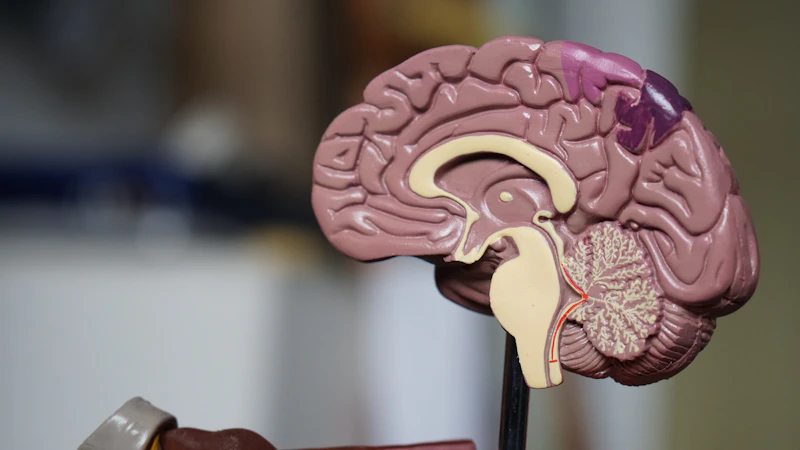
At the core of addiction is the mesolimbic dopamine pathway:
- Ventral Tegmental Area (VTA): Dopamine-producing neurons originate here
- Nucleus Accumbens (NAc): The main "reward center" — receiving dopamine signals
- Prefrontal Cortex (PFC): Decision-making and impulse control
- Amygdala: Emotional associations and conditioned responses
- Hippocampus: Memory of rewarding experiences and contexts
Natural rewards (food, sex, social bonding) activate this system modestly, producing the motivation to pursue survival-essential behaviors. Drugs of abuse hijack this system, producing signals far more intense than any natural reward.
The Dopamine Surge
The classic evidence comes from rats. Using brain microdialysis in freely moving animals, Di Chiara and Imperato showed that drugs abused by humans (opiates, ethanol, nicotine, amphetamine and cocaine) raised extracellular dopamine, especially in the nucleus accumbens, while drugs people do not abuse (such as imipramine or diphenhydramine) did not (Di Chiara & Imperato, 1988, PNAS). The exact percentage increases depend on the drug, the dose and the experiment, so we don't quote a single number here.
This dopamine signal is a core reason drugs are so reinforcing, and the brain adapts to it in ways that feed addiction.
How Addiction Develops: Three Stages
Neuroscientist George Koob's framework, set out with Nora Volkow in Lancet Psychiatry (2016), describes addiction as a three-stage cycle:
Stage 1: Binge/Intoxication
The initial drug use activates the reward system:
- Massive dopamine release in the nucleus accumbens
- Positive reinforcement: The brain learns "this substance = intense pleasure"
- Reward prediction errors: The drug produces a reward far exceeding expectations
- The brain begins to associate drug-related cues (places, people, paraphernalia) with the reward
Stage 2: Withdrawal/Negative Affect
With repeated use, the brain adapts:
- Dopamine receptor downregulation: D2 receptors decrease, reducing sensitivity to normal rewards
- Hedonic set point shifts: The baseline mood drops below normal — you need the drug just to feel "okay"
- Anti-reward system activation: Stress hormones (CRF, dynorphin) increase, producing dysphoria
- Withdrawal symptoms: Anxiety, irritability, depression, physical symptoms specific to the drug
At this stage, the person uses not for pleasure but to avoid the pain of withdrawal. Motivation shifts from positive reinforcement to negative reinforcement.
Stage 3: Preoccupation/Anticipation (Craving)
The most insidious stage:
- Prefrontal cortex dysfunction: Impaired decision-making and impulse control
- Sensitized cue reactivity: Drug-associated cues trigger intense craving
- Compulsive drug-seeking: Despite awareness of negative consequences
- The go system (striatum, habit circuits) overpowers the stop system (PFC)
This three-stage cycle repeats with increasing severity, spiraling into full-blown addiction.
Key Brain Changes in Addiction
1. Reward Deficiency
PET imaging studies show that people with substance use disorders have fewer D2 dopamine receptors in the striatum:
- This creates a state of reward deficiency — ordinary pleasures (food, relationships, hobbies) become less rewarding
- Anhedonia (inability to feel pleasure) is a hallmark of addiction
- Whether D2 levels recover with abstinence, and how long it takes, is not settled; imaging studies have given inconsistent results
2. Hijacked Learning and Memory
Addiction creates extraordinarily powerful memories:
- Conditioned cues: Places, people, smells, and emotions associated with drug use become powerful triggers
- The amygdala stamps drug experiences with intense emotional significance
- The hippocampus stores detailed contextual memories of drug use
- These memories persist for years and can trigger relapse long after detoxification
3. Impaired Executive Control
The prefrontal cortex suffers in addiction:
- Reduced gray matter volume
- Impaired function on decision-making tasks
- Weakened ability to inhibit impulses
- Disrupted connections between PFC and reward circuits
- This is why "just saying no" doesn't work — the brain region responsible for self-control is compromised
4. Habit Formation
With repeated use, drug-seeking shifts from goal-directed behavior to habitual behavior:
- Control transfers from ventral striatum (reward) to dorsal striatum (habits)
- Drug use becomes automatic, triggered by cues without conscious decision
- This is similar to how you drive home on autopilot — but far more destructive
5. Stress System Dysregulation
Chronic drug use can cause long-lasting changes in the brain's stress circuitry (Koob & Volkow, 2016):
- Elevated CRF (corticotropin-releasing factor) in the amygdala
- Increased dynorphin (an anti-reward neuropeptide)
- Heightened stress reactivity: Small stressors trigger disproportionate distress
- Stress becomes a primary trigger for relapse
Behavioral Addictions
The same neural circuitry is involved in behavioral addictions:
Gambling Disorder
- Engages reward circuits that overlap with those involved in drug addiction
- Near-misses produce dopamine responses (explaining persistent gambling despite losses)
- Unlike in drug addiction, PET studies have not found lower striatal D2/D3 receptor availability in gambling disorder (Boileau et al., 2013, Addiction; Clark et al., 2012), so low D2 levels may not be a necessary feature of every addiction
- A diagnosable disorder in the American Psychiatric Association's DSM-5 (2013), where it is the only behavioral addiction placed in the "Substance-Related and Addictive Disorders" chapter (APA fact sheet). The FDA does not "recognize" disorders; diagnostic categories come from the DSM and the WHO's ICD
Gaming Disorder
- WHO-recognized since 2019
- Neuroimaging shows reward circuit changes similar to substance addiction
- Cue reactivity in gaming addicts resembles drug cue reactivity
Food Addiction
- Highly palatable foods (sugar + fat combinations) produce strong dopamine responses
- Binge eating shares neural signatures with drug bingeing
- D2 receptor downregulation seen in obese individuals
- Controversial: not all researchers accept "food addiction" as equivalent to drug addiction
Social Media/Smartphone Addiction
- Variable ratio reinforcement (like slot machines) drives compulsive checking
- Dopamine responses to likes and notifications
- Emerging neuroimaging evidence of reward circuit changes
- Not yet formally recognized as a disorder in DSM-5-TR
What About "Dopamine Detox"?
"Dopamine fasting" was coined by California psychiatrist Cameron Sepah as a cognitive behavioral approach: step away from cues such as notifications so they lose some of their pull. Sepah himself said the name is not meant literally. As Harvard Health Publishing points out, avoiding stimulating activities does not actually lower your dopamine levels, so the idea of "resetting" dopamine is a misreading of the science. A PubMed search for "dopamine fasting" or "dopamine detox" in October 2026 returned a single narrative literature review (Desai et al., 2024, Cureus) and no controlled trials. Cutting back on a habit that is causing problems can still help; just don't expect it to work by changing brain dopamine.
Why Relapse Is So Common
Relapse rates for addiction (40-60%) are similar to those for other chronic diseases such as hypertension and asthma (50-70%) (McLellan et al., 2000, JAMA; summarised by NIDA). This is because:
- Drug-associated memories are long-lasting: Treatment does not simply erase conditioned associations; much of recovery is learning new responses that compete with them
- Stress triggers craving: And life inevitably brings stress
- PFC recovery is slow: Executive control takes months to years to recover
- Reward deficiency persists: Anhedonia during early recovery makes sobriety feel unbearable
- Environmental cues are everywhere: Returning to drug-associated environments reactivates craving circuits
Relapse is not failure — it's a predictable part of a chronic disease that requires ongoing management.
Modern Neuroscience-Based Treatments
Medication-Assisted Treatment (MAT)
| Medication | Addiction | Mechanism |
|---|---|---|
| Naltrexone | Alcohol, opioids | Blocks opioid receptors, reduces reward |
| Buprenorphine | Opioids | Partial opioid agonist, reduces craving |
| Methadone | Opioids | Full opioid agonist, prevents withdrawal |
| Acamprosate | Alcohol | Modulates glutamate, reduces craving |
| Varenicline | Nicotine | Partial nicotinic agonist |
| GLP-1 agonists | Under investigation | May reduce reward from drugs and food |
For a closer look at the receptor that nicotine and varenicline act on, see what the real α4β2 nicotinic receptor structures show.
Emerging Neuroscience-Based Approaches
- Transcranial magnetic stimulation (TMS): Stimulating the PFC to restore executive control; FDA-cleared for nicotine addiction
- Deep brain stimulation (DBS): Targeting the nucleus accumbens; experimental for severe, treatment-resistant addiction
- Psychedelic-assisted therapy: Psilocybin has shown promise in early trials for alcohol use disorder (Bogenschutz et al., 2022, 95 participants) and smoking (Johnson et al., 2014, an open-label pilot with 15 participants). MDMA's evidence is mainly in PTSD; for addiction there is only a small open-label safety study in alcohol use disorder (Sessa et al., 2019)
- Vaccines: Anti-drug vaccines that prevent drugs from crossing the blood-brain barrier (in development)
- Optogenetics (research): Precise control of addiction circuits in animal models, informing future treatments
Evidence-Based Behavioral Treatments
- Cognitive Behavioral Therapy (CBT): Restructures thought patterns and develops coping strategies
- Contingency Management: Provides tangible rewards for sobriety (leverages intact reward circuitry)
- 12-Step Programs: Social support and structured recovery framework
- Motivational Interviewing: Resolves ambivalence about change
Reducing Stigma Through Neuroscience
Understanding addiction as a brain disorder is crucial for reducing stigma:
- Addiction involves measurable brain changes visible on imaging
- These changes impair the very brain regions needed for self-control
- Genetic factors account for 40-60% of addiction vulnerability
- Environmental factors (trauma, poverty, social isolation) contribute significantly
- Moral judgment doesn't treat disease; medical treatment does
Conclusion
Addiction is a chronic brain disorder that hijacks the neural circuits evolved for survival. It creates an overwhelming drive to use despite devastating consequences — not because of weak character, but because the brain's reward, memory, and control systems have been fundamentally altered.
The neuroscience of addiction teaches us three crucial lessons:
- Compassion: Addicted individuals are battling a brain disease, not a character flaw
- Hope: The brain's plasticity means recovery is possible, given time and support
- Evidence-based treatment works: Medication, therapy, and social support can rewire addicted circuits
Where to Get Help
If you or someone you know is struggling with addiction:
- Korea: Call 1342 (용기한걸음센터), a 24-hour drug counseling line run by 한국마약퇴치운동본부 for the Ministry of Food and Drug Safety. Calls and counseling are free and confidential (korea.kr). For alcohol, gambling, internet and drug problems, your local 중독관리통합지원센터 (addiction management center) offers counseling and rehabilitation programs (Ministry of Health and Welfare).
- United States: SAMHSA's National Helpline, 1-800-662-4357 (1-800-662-HELP) — free, confidential, 24 hours a day, 365 days a year.
Related Reading
관련 글
Why Is Nicotine So Hard to Quit? What the Real Receptor Structures Show
10월 3일 · 6 min read
NeuroscienceSame Lock, Different Effects: Why LSD Is Psychedelic and Lisuride Isn't
10월 9일 · 8 min read
NeuroscienceWe Followed One Neuron Through a Map of the Human Brain — Methods, Numbers, and What We Got Wrong
10월 1일 · 8 min read
NeuroscienceDoes Chronic Stress Really Lower Hippocampal BDNF? What an LLM Read of 9,585 Studies Actually Says
6월 5일 · 8 min read